
Gutters, Downspouts, and Roof Runoff: Protecting Your Foundation in the NC High Country
Roof runoff is one of the biggest sources of foundation water. Here is how gutters and downspouts fit into the bigger drainage picture, and what to check this fall.
A Roof Sheds a Lot of Water
Even a modest roof collects a surprising amount of water in a heavy rain, and all of it has to go somewhere. When gutters and downspouts do their job, that water is carried away from the house. When they clog, leak, or empty right beside the foundation, the same water soaks the soil next to your footings, which is a common starting point for wet crawl spaces, damp basements, and settling problems.
Why this matters more on mountain lots
Many High Country homes sit on slopes, and water that is dumped beside the uphill wall tends to follow the grade toward and under the structure. Heavy summer storms, fall leaf drop from mature hardwoods and pines, and winter freeze-thaw cycles add stress to gutter systems that homeowners in flatter, drier areas rarely face. A system that was fine when the house was built can fall behind as trees grow and the roof ages.
A fall maintenance checklist
Late fall, once most leaves have come down, is a good time to walk the house with a ladder and a hose. Clear leaves, needles, and shingle grit from the gutters and check that water flows freely toward each downspout. Flush the downspouts and make sure underground extensions are not blocked. Look for sagging sections, loose hangers, open seams, and rust or cracked end caps. Watch for water spilling over the edge during a rain, because it usually means a clog or a gutter that is pitched wrong. If you have not already, also review our winter septic and drainage prep checklist for the rest of your property.
Common layout mistakes
A few problems show up again and again. Downspouts that end at the foundation or just a foot or two from it dump water exactly where you least want it. Extensions that point toward the house, driveway, or a walkway can create ponding and winter ice. Too few downspouts for a long roof run can overload one section of gutter. Valleys and roof intersections can throw a lot of water into a single point, so they deserve extra attention. Downspout water should also never be directed onto a septic tank or drainfield area, since extra water there can stress the system.
Where to send the water
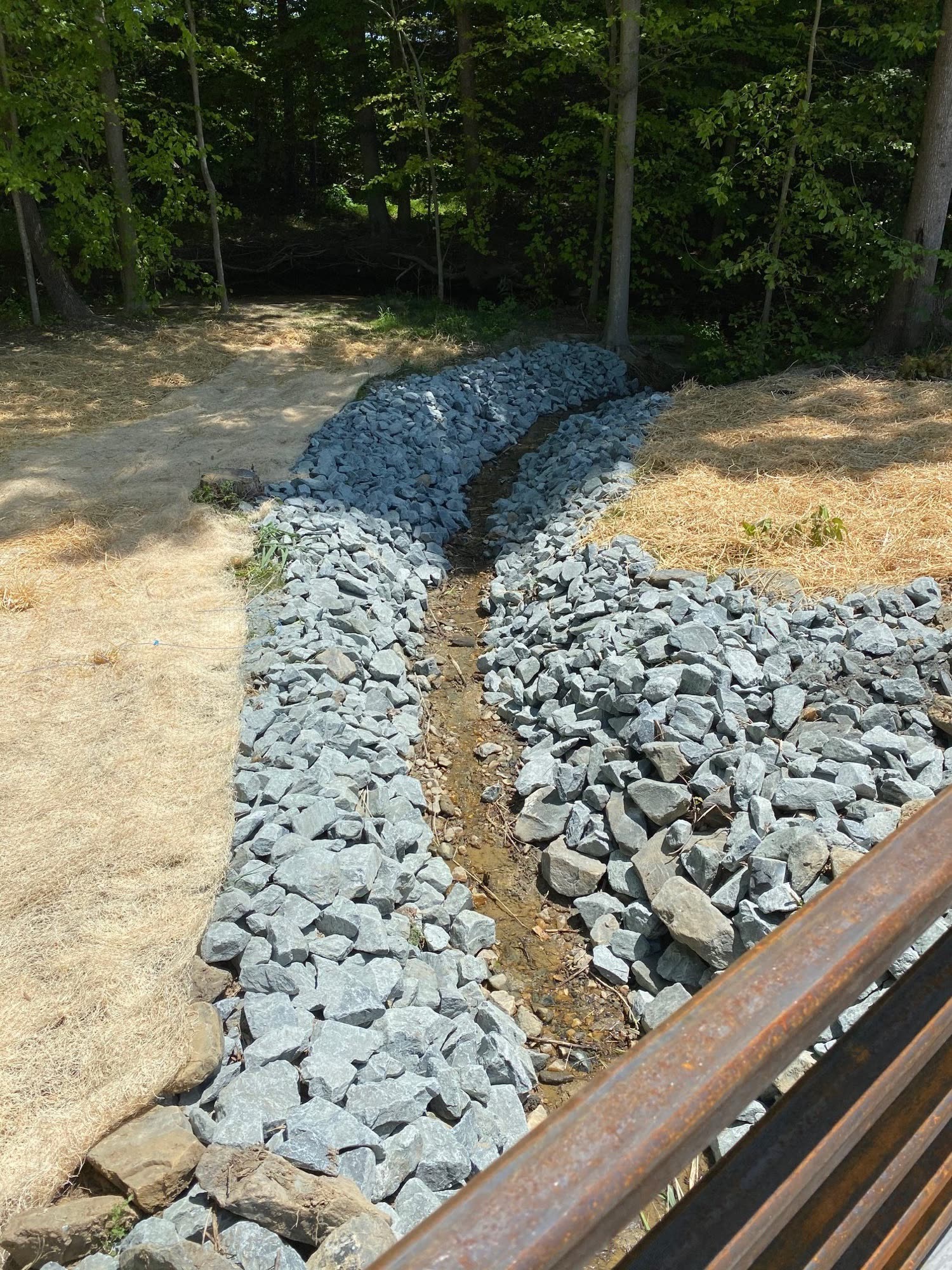
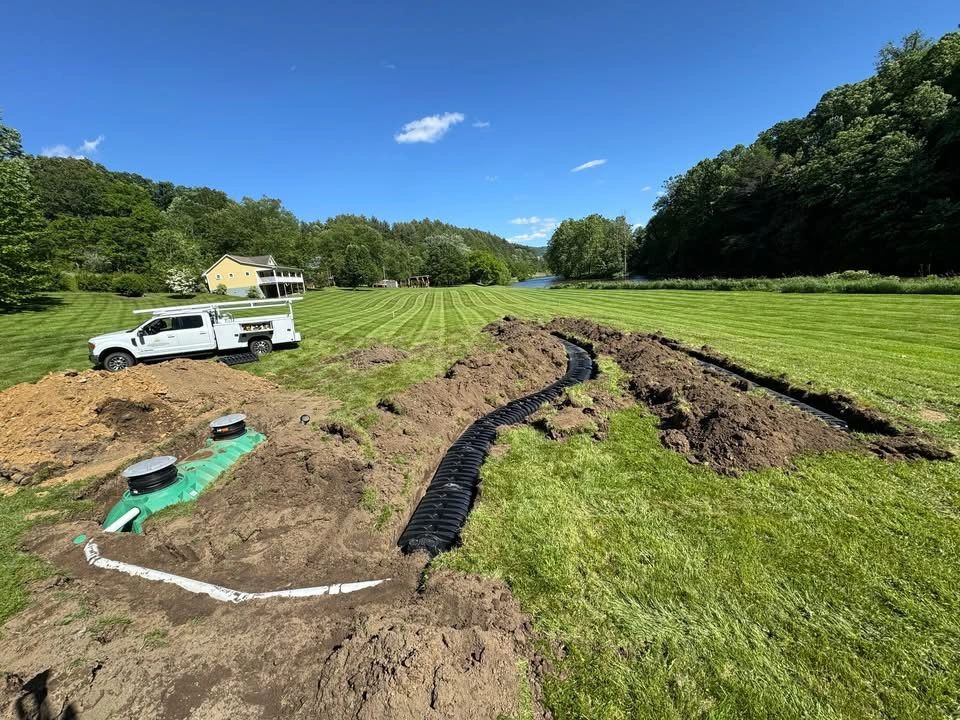
The goal is to carry roof runoff well past the foundation and onto ground that slopes away. On gentle ground, longer surface extensions or splash blocks may be enough. On steeper or flatter lots with nowhere to go, solid buried pipe can carry water to a safe discharge point such as a lower area of the yard, a stable outlet, or a drainage system. Our yard drainage guide explains grading and French drains, and our crawl space moisture guide shows what can happen underneath when roof runoff is not managed.
Know when it is more than a gutter problem
If you clean and extend your downspouts and still see standing water, soil washing away, cracks, or damp crawl space or basement walls, the cause may be grading or groundwater and not just the roof. Riverfront Group is a licensed general contractor serving Ashe, Alleghany, Avery, Watauga, and Wilkes counties, and we can help you work out whether the fix is simple maintenance, regrading, drainage work, or something else.
Water collecting near your foundation after every rain?
Call Adam to talk through what you are seeing and the right place to start.