
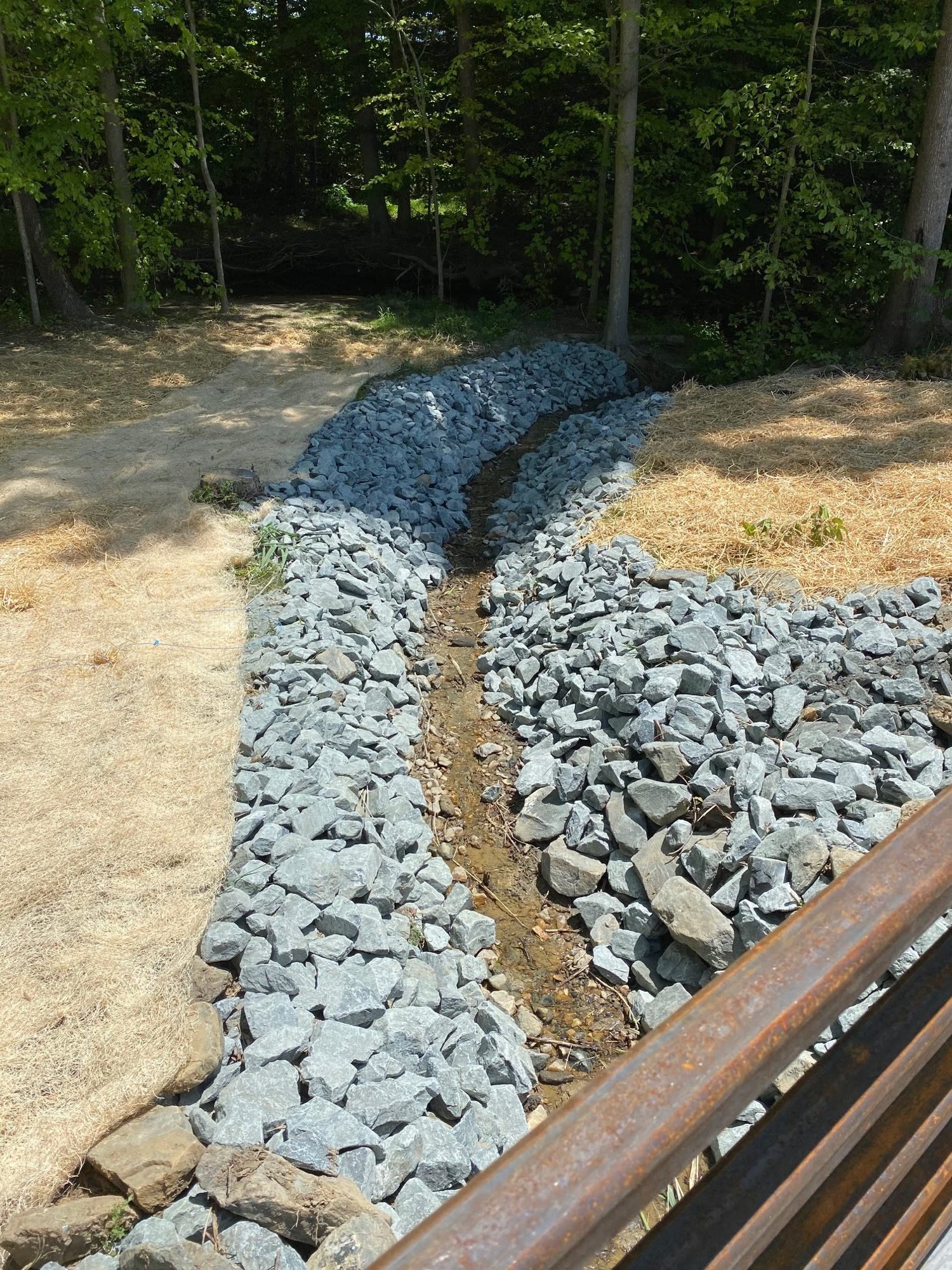
Yard Drainage & Water Problems in the NC High Country
French drains, ponding water, retaining walls, and waterproofing — what causes drainage problems on mountain lots and how they're actually fixed.
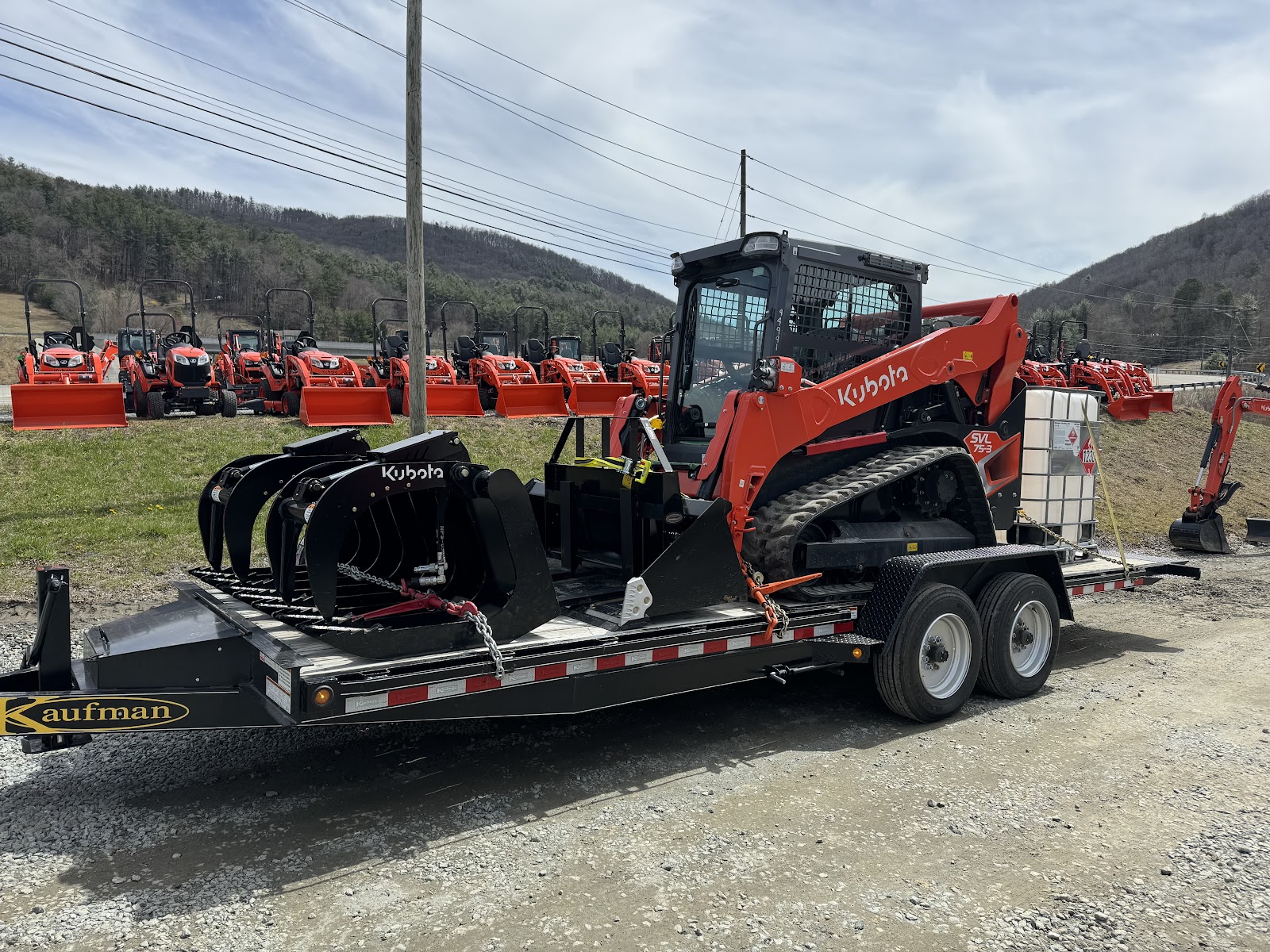
See Our Drainage Work
If you own property in Ashe, Alleghany, Avery, Watauga, or Wilkes County, there's a good chance you've dealt with water somewhere you didn't want it — a soggy patch of yard that never dries out, a damp crawl space, or a slope that keeps sliding a little more every time it rains. Mountain terrain moves a lot of water fast, and most drainage problems come down to a handful of root causes that are very fixable once you know what you're looking at.
Why yards hold water in the High Country
Ponding water is usually caused by one or more of these:
- Compacted or clay-heavy soil that doesn't absorb water quickly, common in mountain subsoil once the topsoil layer is disturbed by grading or construction.
- Lack of slope (grading) away from structures — if the ground doesn't fall away from your house or garage, water has nowhere to go but down and in.
- Hillside runoff draining downhill into a flatter area of the lot, which is extremely common on the sloped properties typical of Ashe and Watauga counties.
- Undersized or missing drainage — older homes and additions were often built without the gutters, downspout extensions, or subsurface drains a modern grading plan would include.
French drains: the most common fix
A French drain is a gravel-filled trench with a perforated pipe at the bottom that collects groundwater and carries it away from the problem area by gravity. It's the go-to solution for yards that stay soggy, low spots that never dry out, and hillside lots where runoff needs to be intercepted before it reaches a foundation, driveway, or septic drainfield. Done right, a French drain is sized to the volume of water it needs to move and daylighted at a point low enough on the property that the water actually has somewhere to go.
Retaining walls do more than hold back a slope
On steep lots, a retaining wall is often the first step in controlling both erosion and water movement. A wall built without drainage behind it is a wall that will eventually fail — water builds up in the soil it's holding back, adding pressure the wall wasn't designed for. That's why a properly built retaining wall is paired with backfill gravel and a drainage pipe behind it, so groundwater has an escape route instead of pushing against the structure.
Basement and foundation waterproofing
Common warning signs of a foundation water problem include a damp or musty crawl space, visible water stains or white mineral deposits (efflorescence) on foundation walls, or water entering after heavy rain. The most effective fix usually starts outside, not inside: correcting the grading and installing exterior drainage so water is directed away from the foundation in the first place. Sealing or waterproofing the wall itself is often paired with that grading work rather than used as a stand-alone fix, since keeping water away from the foundation is more durable than trying to block it once it has already found a path in.
Getting it right on a mountain lot
Every one of these fixes — French drains, grading, retaining walls, and waterproofing — depends on understanding where water on a specific property actually comes from and where it needs to end up. That takes a site walk, not a guess. Riverfront Group has been grading, excavating, and building on High Country properties throughout Ashe, Alleghany, Avery, Watauga, and Wilkes counties since 2019, and we look at drainage as part of the whole property, not an isolated patch job.
See our full drainage, erosion control & waterproofing services, or reach out below for a free site visit.
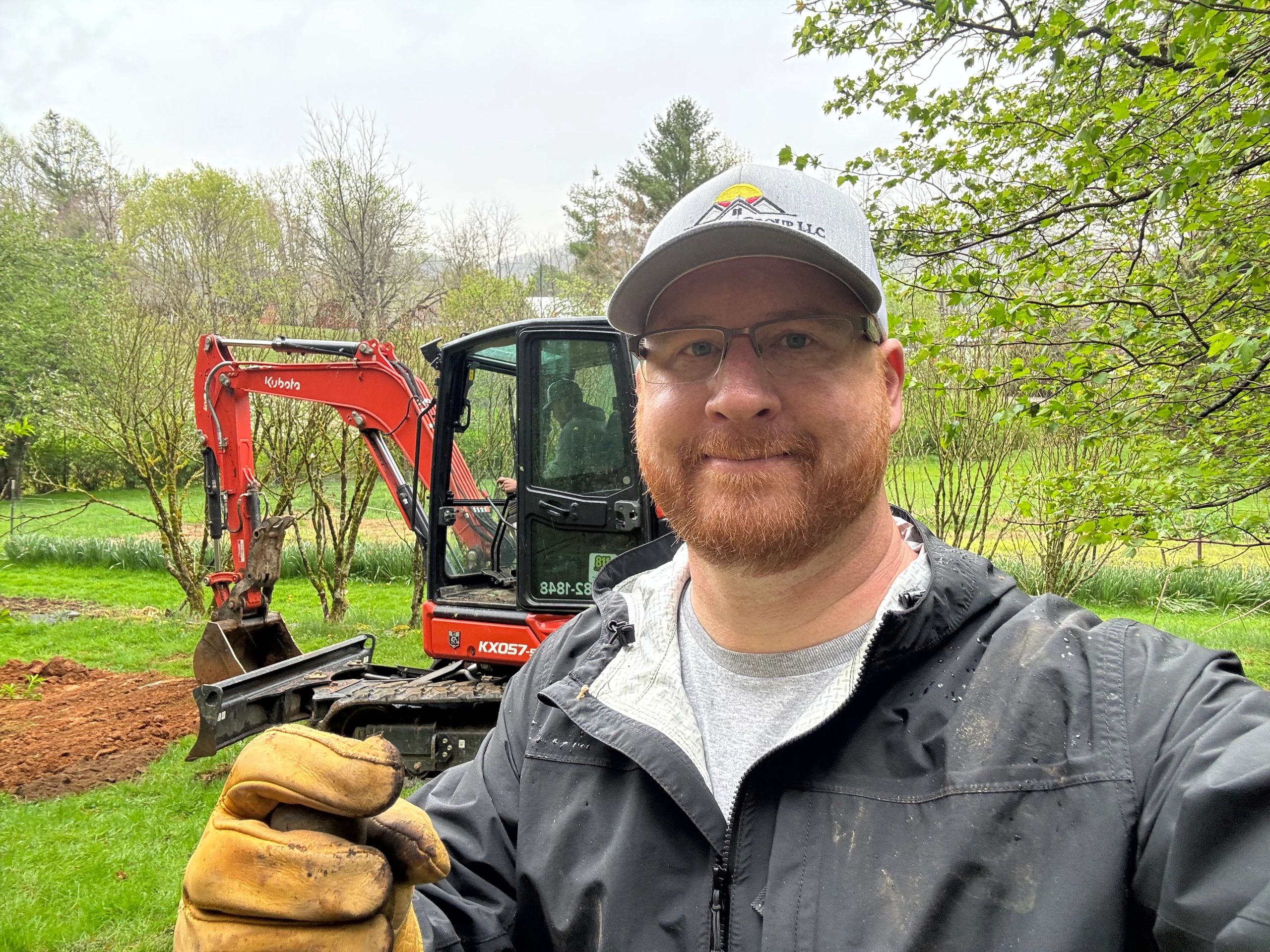
Get a drainage assessment
Every lot moves water differently. Call Adam for a site visit and a straight answer on what your property actually needs.