
What to Expect During Septic System Installation
A step-by-step look at how a septic system actually gets installed in NC's High Country, from the first site visit to final cover-up.
A Process, Not Just a Dig
Homeowners searching for septic installation "near me" usually picture a crew showing up and digging a hole. In reality, a legal, working septic system in North Carolina goes through several distinct stages before anything gets buried — each one protecting your investment and your property.
Step 1: Site visit and soil evaluation
Every project starts with a walk of the property. A licensed installer or soil scientist evaluates the soil type, depth, slope, and drainage across the lot to figure out where a system can legally go and what type it will need to be. In the mountains, this step matters more than almost anywhere else — rocky or clay-heavy soil, steep grades, and tight building envelopes are common, and they directly shape what happens next.
Step 2: Permitting with the county health department
Once the site has been evaluated, the installer submits an application to the local county environmental health department. In North Carolina this results in an Improvement Permit, which confirms the site can support a septic system and specifies the type, followed by a Construction Authorization before digging can legally begin. Permit turnaround time varies by county and season, so this step is usually the longest part of the timeline — often several weeks — even though it involves no digging at all.
Step 3: System design and layout
With the permit in hand, the installer lays out the tank location, drainfield lines, and distribution box based on the approved plan, setbacks from the house, well, property lines, and any slope constraints. On a straightforward lot this might be a conventional gravity system; on a steeper or wetter High Country lot it may call for a low-pressure pipe, mound, or engineered system instead.
Step 4: Excavation and installation
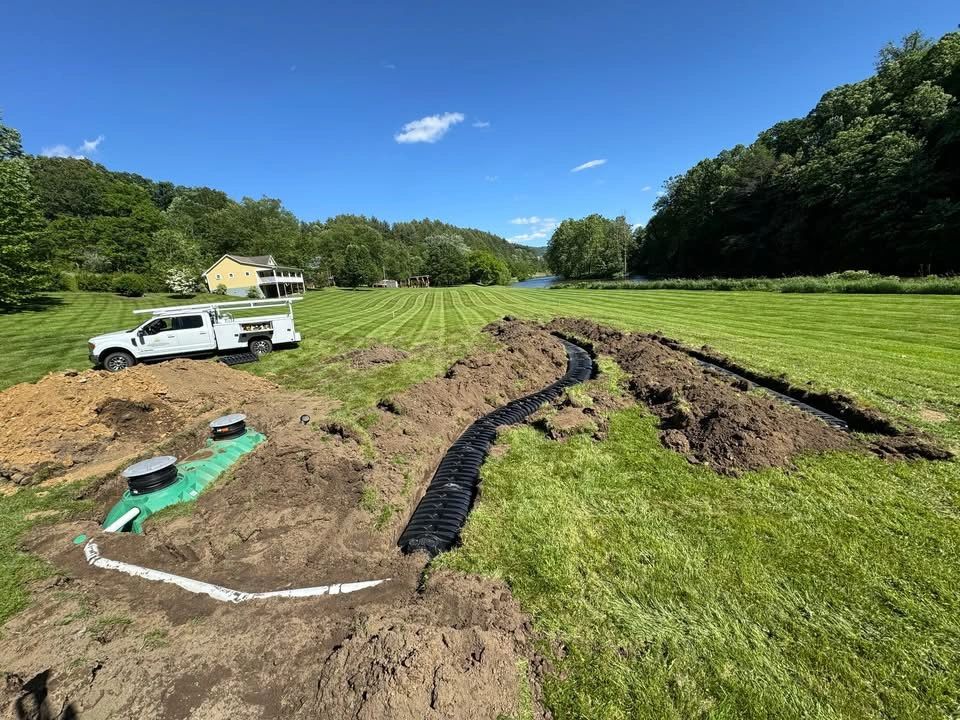
This is the stage most homeowners picture — excavating for the tank and drainfield, setting the tank, running distribution lines, and connecting everything to the house's plumbing. For a typical residential system, this physical installation usually takes one to three days once the crew is on site, though larger or more complex systems can take longer.
Step 5: Final inspection
Before anything is covered with soil, the county environmental health department inspects the completed system to confirm it matches the approved permit and was installed correctly. This inspection is not optional — covering a system before it passes inspection can create real problems at resale or if something needs to be corrected later.
Step 6: Backfill and site restoration
Once the system passes inspection, the installer backfills the excavation, grades the area, and restores the yard as close to its original condition as possible. At this point the system is ready to use, and the homeowner should receive documentation of the permit, inspection, and system layout for their records — useful for future maintenance and required at resale in most cases.
Why the process matters more in the High Country
In Ashe, Alleghany, Avery, Watauga, and Wilkes counties, mountain terrain adds variables a flatland installation never sees — rock, slope, and highly variable soil from one side of a lot to the other. Skipping steps, guessing at soil conditions, or hiring someone without an active NC installer certification through the NC On-Site Wastewater Contractors and Inspectors Certification Board is one of the most common ways homeowners end up with a system that fails inspection, backs up, or needs to be redone entirely.
Riverfront Group has managed septic installations throughout the High Country since 2019, walking every property before quoting and handling permitting, installation, and inspection coordination as one continuous process. Learn more about our septic installation and repair services, see typical septic installation costs, or reach out below to schedule a site visit.
Schedule your septic site evaluation
Every lot in the High Country is different. Call Adam for a no-pressure site visit and a clear explanation of what your property will need.