
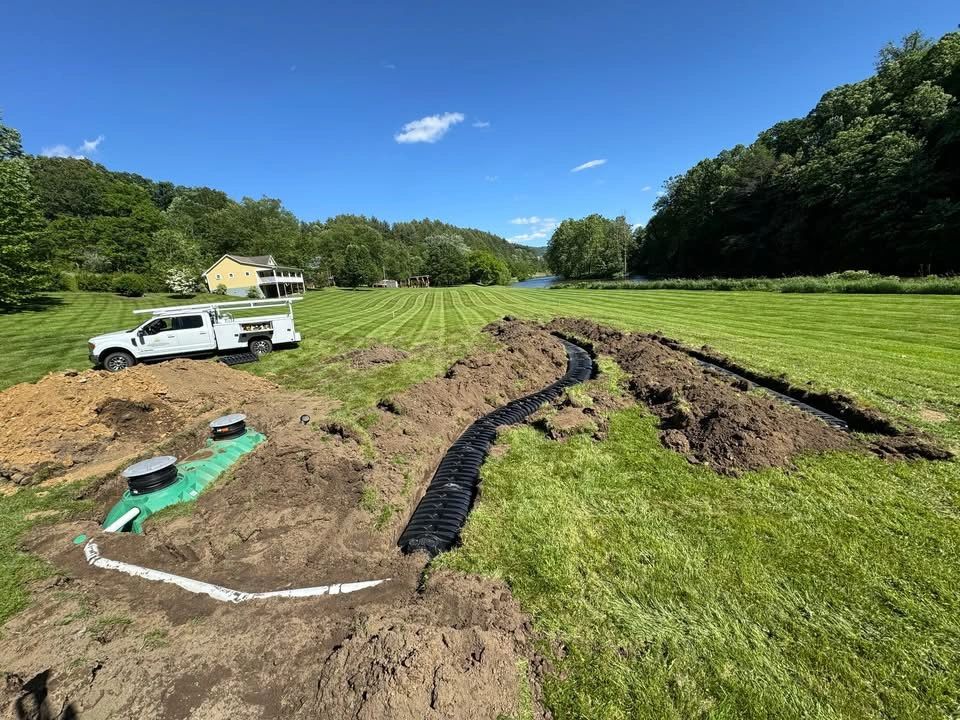
How Much Does Septic Installation Cost?
A clear look at pricing, site factors, permits, and what NC property owners should expect from a septic install.
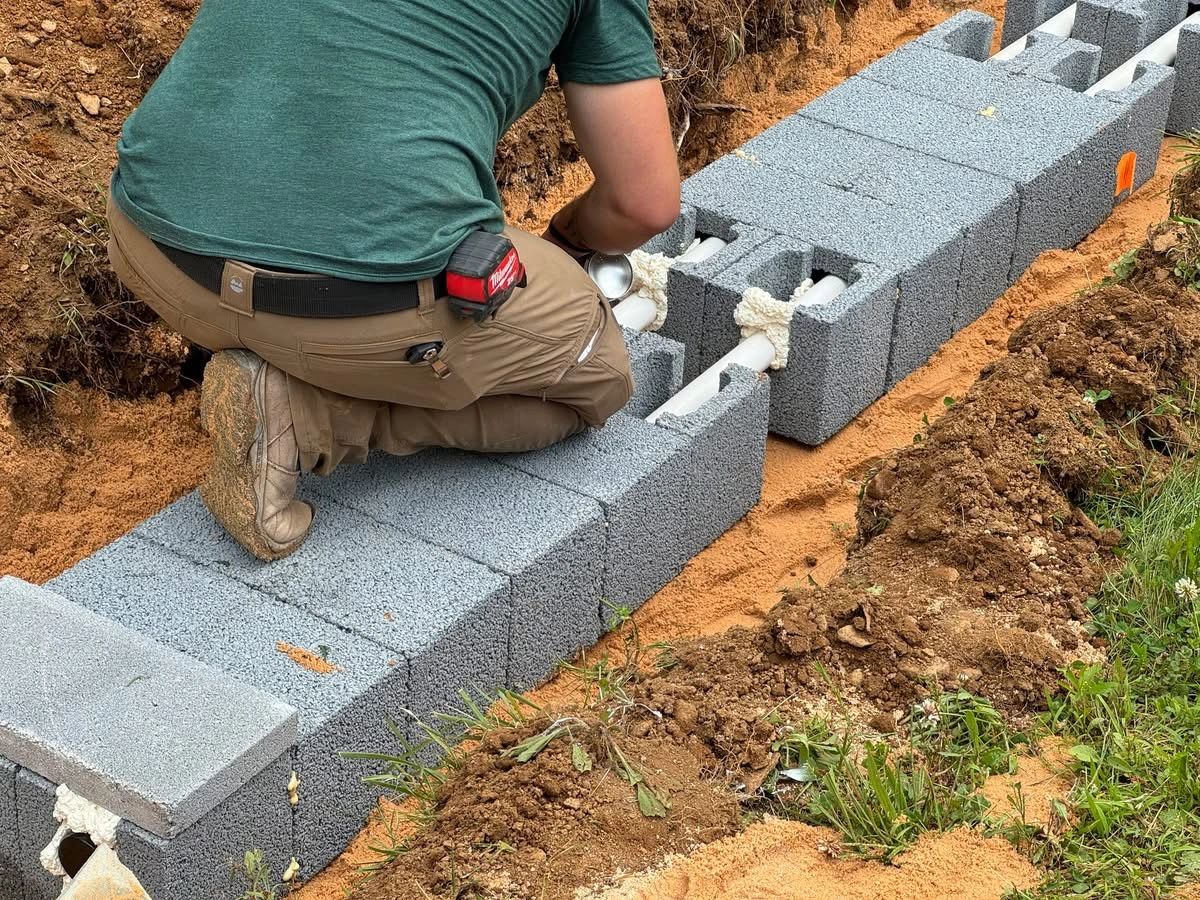
See Our Septic Installation Work
If you're building or buying property in Ashe County or anywhere in NC's High Country, one of the first questions is almost always the same: how much is a septic system going to cost? The honest answer is “it depends” — but here's what actually drives that number.
Typical cost ranges by system type
Statewide, a new septic system in North Carolina can run anywhere from around $3,000 for a simple conventional system on good soil to well over $70,000 for an engineered system on a difficult mountain lot. Nationally, the average conventional installation runs about $7,500–$8,000, and North Carolina falls in that same range for straightforward jobs (Septic & Well Pro, 2026 NC septic cost data).
- Conventional gravity system: roughly $3,000–$7,500 — the most affordable option, but it requires good soil and adequate depth.
- Low-pressure pipe (LPP) or T&J panel systems: roughly $6,500–$9,000 — common where mountain soils are marginal.
- Mound systems: roughly $10,000–$20,000 — used where the water table is high.
- Drip irrigation or advanced/engineered systems: $20,000–$70,000+ — needed on tight lots, steep terrain, or poor soil where nothing simpler will pass.
In our part of the High Country, soil and slope are the biggest wild cards. A lot with rocky or clay-heavy mountain soil almost always needs a more advanced (and more expensive) system than a lot with sandy loam.
What actually drives the price on your lot
Before anyone can give you a real number, a licensed soil scientist or environmental health specialist has to evaluate your property. That evaluation — not a generic price list — is what determines your system type and, ultimately, your cost. Key factors include:
- Soil type and depth — sandy, well-drained soil is cheaper to build on than rocky or clay-heavy ground.
- Slope and access — steep or hard-to-reach lots need more excavation and equipment time.
- Distance from the house, well, and property lines — setback requirements can push a system into a smaller, more complex footprint.
- System size — driven by the number of bedrooms and expected daily water use (gallons per day).
- Permitting — the local health department issues an Improvement Permit and Construction Authorization before any digging starts, and permit turnaround varies by county.
Don't forget permits and inspections
In North Carolina, no one — including a homeowner — can legally install or repair a septic system without holding an active installer certification through the NC On-Site Wastewater Contractors and Inspectors Certification Board (NCOWCICB). Your installer should pull the required permits, coordinate the site evaluation with the county health department, and schedule the final inspection before the system is covered up. Skipping any of that step can turn into an expensive problem at closing or resale.
Getting an accurate number for your property
Because so much depends on soil and site conditions, the only way to get a real number is a site visit — not a phone estimate. Riverfront Group has been installing and repairing septic systems throughout Ashe, Alleghany, Avery, Watauga and Wilkes counties since 2019, and we walk every property before we quote it.
Learn more about our septic installation and repair services, or reach out below for a project estimate.
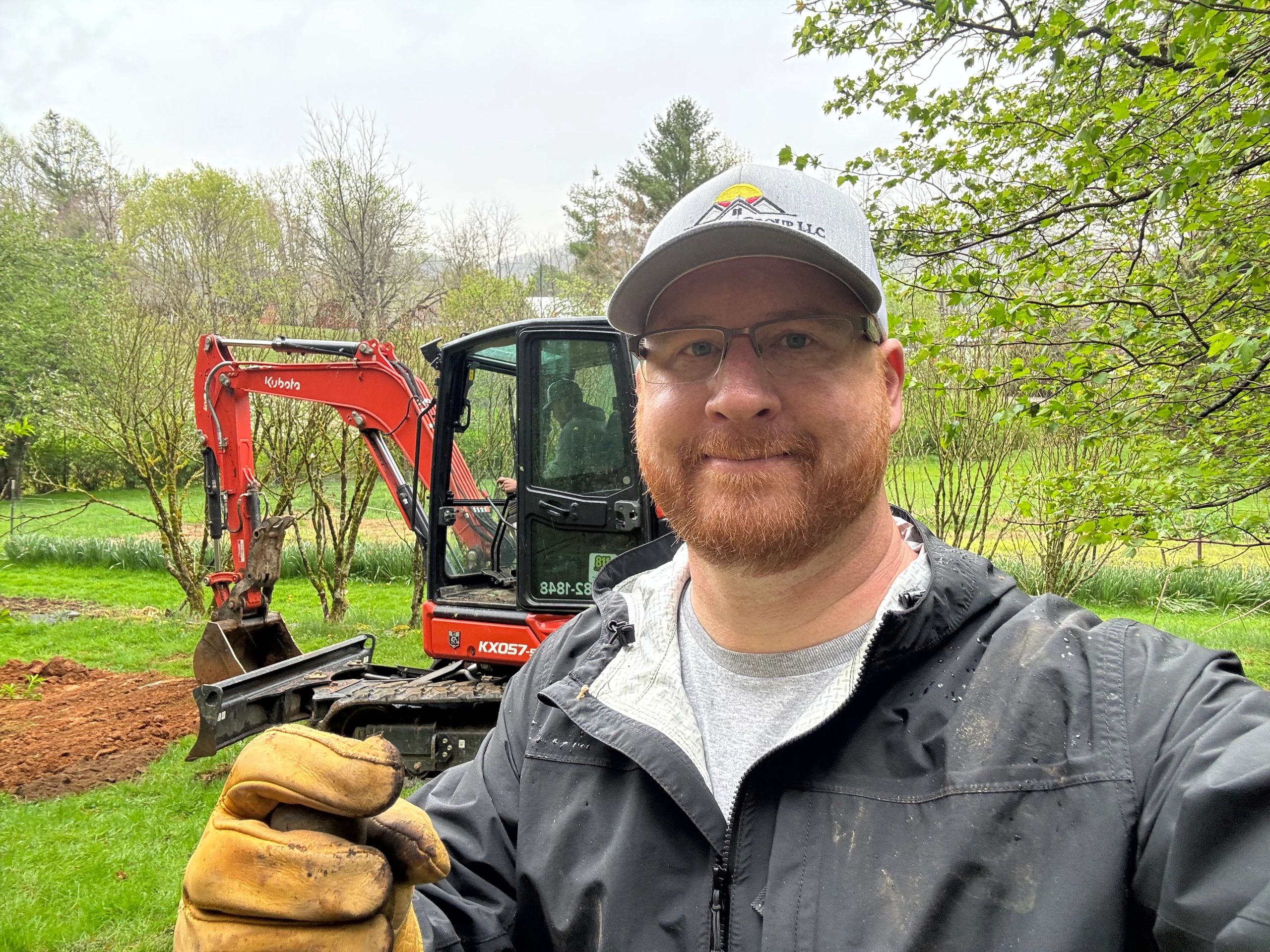
Get an honest septic estimate
Every lot in Ashe County is different. Call Adam for a no-pressure site visit and a written quote based on your actual soil and layout.